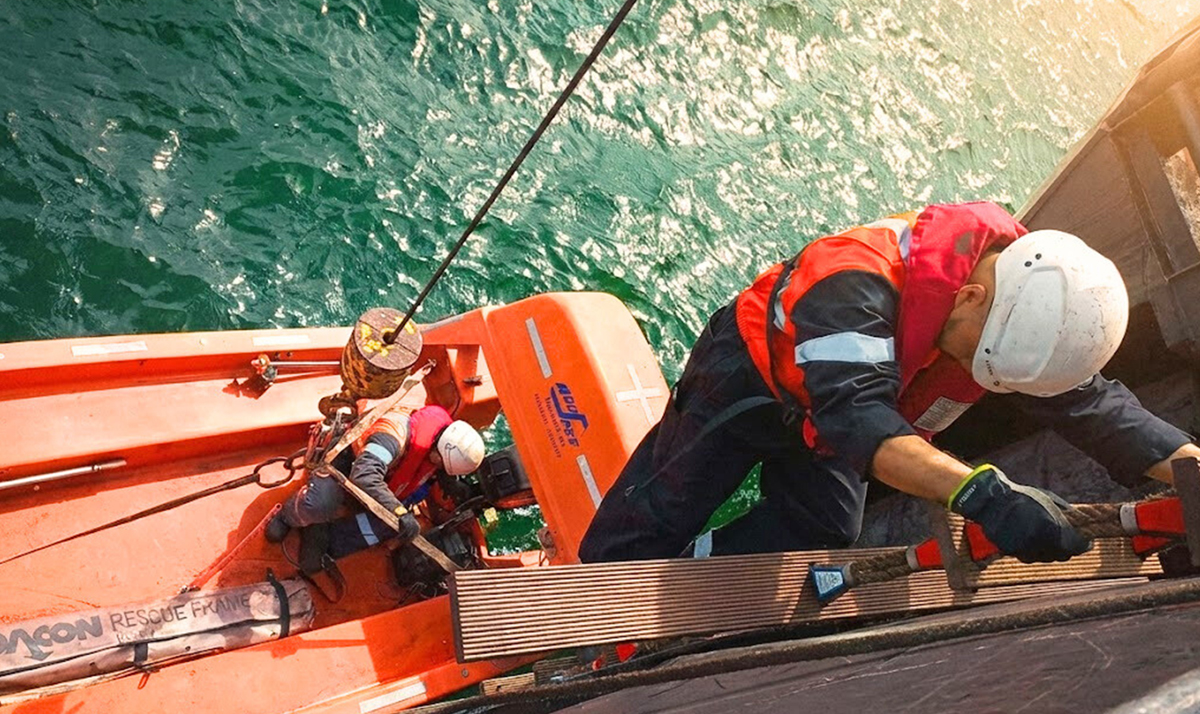
Hailed as modern-day heroes, Overseas Filipino Workers (OFWs) power the Philippine economy through their remittances, skills, and sacrifice. But for the more than 2.05 million OFWs deployed as of September 2024, the journey abroad is shared with the families who wait and build lives back home. Recognizing this shared sacrifice, the PTC OFW and Family Welfare Program was created to equip local governments to better support OFWs and their families.
Two Stories, One Reality
Carlos Fernandez*, a chief mate from Samar, has spent over a decade at sea. In 2021, while he was onboard a vessel in the Pacific, Super Typhoon Odette struck Eastern Visayas. Helplessly watching from afar as his family in Tacloban endured the storm, Carlos realized that while he was trained to manage crises at sea, his family had little preparation for emergencies at home. Though they survived, their home and small store were destroyed—forcing them to rebuild using savings meant for other dreams.
Elena Ramirez*, who married a third engineer at 24, faced a different challenge. Managing household finances alone, she struggled with budgeting, mounting expenses, and unexpected medical costs. “I wanted to honor my husband’s hard work,” she shares, “but I didn’t have the tools.” Years later, she now mentors other OFW wives, wishing structured financial guidance had been available earlier.
Their stories reflect a broader need: not just financial assistance, but preparation, information, and accessible local support.
A Program Built on Partnership
“We’ve spent years listening to seafarers, families, and LGUs,” says Josh McCarver, Lead Program Officer of the PTC OFW Program. “Grassroots systems are not always equipped to address the day-to-day realities OFW families face. This program is our commitment to changing that.”
The initiative focuses on three pillars: localized data systems for LGUs, skills and career development for OFWs, and capacity-building for families. Key components include Disaster Resilience Trainings and Financial Literacy and Wealth Management Workshops—equipping households with practical tools for preparedness, budgeting, saving, and small enterprise development. Pilot LGUs have been identified, MOUs signed, and trainings are being scheduled.
For Dr. Abraham De Castro of Bacoor City’s Public Employment Services Office, the program expands LGU support beyond documentation and job matching. “OFW welfare includes health, financial security, youth development, and disaster preparedness. This gives us a comprehensive framework to serve them better,” he explains.
The maritime sector also strongly backs the initiative. Capt. Ronald Enrile, Senior Adviser for the Shipping Cluster at PTC, notes, “A seafarer’s peace of mind is directly tied to his family’s well-being. When families are supported, seafarers can focus on their duties with confidence.”
A Future Built Together
Backed by PTC Group entities including the Talent Acquisition Group, PHILCAMSAT, First Maritime Credit Corporation, and RSE Foundation, Inc., the program continues to expand nationwide. Its goal is simple but profound: to ensure OFW families never face their challenges alone.
For Carlos and Elena, this initiative represents more than assistance—it represents partnership. OFW welfare does not begin and end at deployment. It begins at home. And increasingly, it is being met there—with preparation, coordination, and care.
*Names were changed for privacy.

Comments are closed