
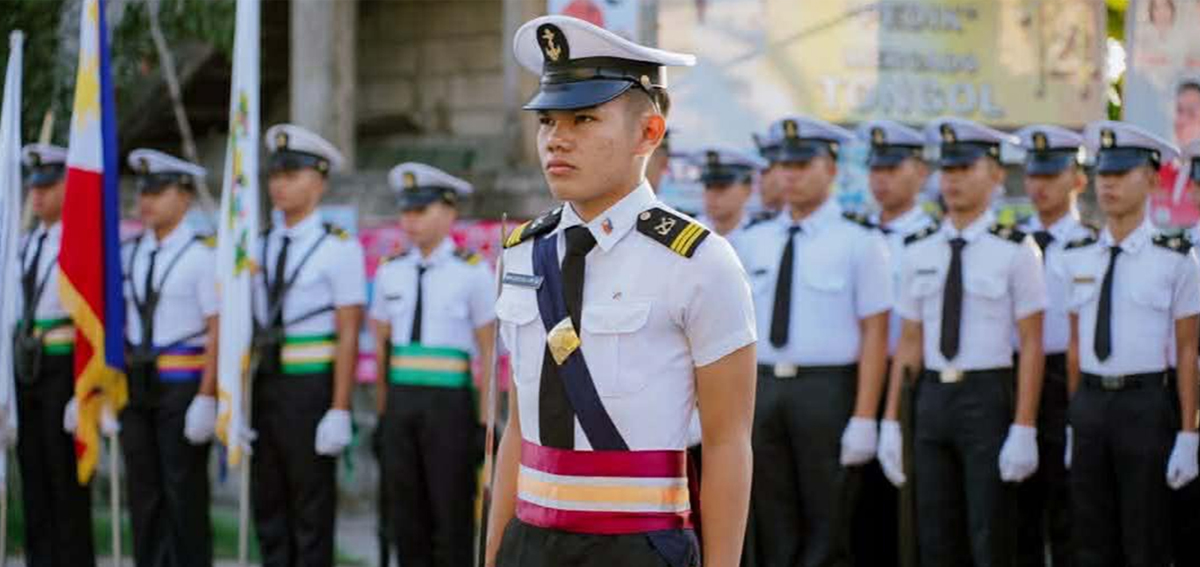
SAN NARCISO, Zambales — At exactly 4:00 am, while most of the country still sleeps, Peter Paul Mauricio’s day is already in full, unforgiving motion. In the dim, pre-dawn light of the Philippine Merchant Marine Academy (PMMA) barracks in San Narciso, Zambales, the 4th Class Midshipman from Minalin, Pampanga, is already standing at attention, bracing for another 18-hour gauntlet where rest is a luxury and pressure is the constant companion.
It is a world away from the quiet, fishpond-dotted landscapes of his hometown, but it is exactly where the product of the PTC Sea Mariners program and Sto. Rosario National High School has always intended to be.
In a rare moment of reflection amidst the rigid discipline of academy life, Mauricio opened up about the grueling reality of his current “plebe” status, the immense value of his senior high school roots, and the grit required to turn a childhood dream into a spotless white uniform.
The Daily Grind of a 4th Class Cadet
When asked “Kumusta sa PMMA?” (How is it at PMMA?) Mauricio’s answer is unflinching. He doesn’t romanticize the experience; he describes it with the precision of a future deck officer.
“It is difficult because you are under pressure every single day. You cannot relax. Being a 4th Class, you wake up at 4:00 am, and you go to sleep at 10:00 pm. In that entire day, you are constantly doing something—juggling academics and military training simultaneously,” Mauricio explained.
The exhaustion, he admits, is secondary to the isolation. “The hardest part is being far from your family. You cannot just go home whenever you want. You carry that weight with you, but you also know that every drill and every quiz is preparation. This is so that when we finally board the ship, we are ready.”
The Edge from Maritime Senior High School
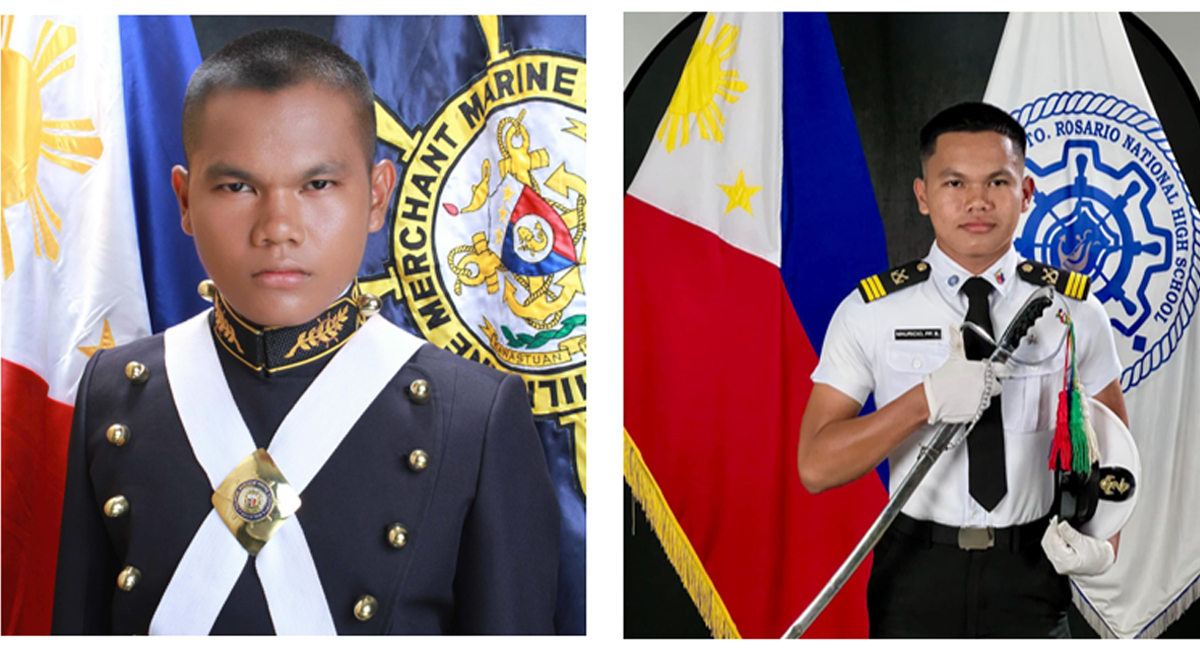
Mauricio believes that his journey didn’t begin when he stepped onto the PMMA parade grounds in San Narciso; it began in the halls of Sto. Rosario National High School’s Maritime Senior High School program. While many of his new classmates are struggling to find their sea legs under the dual burden of academics and physical training, Mauricio is already in stride.
“Those two years in Maritime SHS were a massive help. I can honestly say I had an advantage over some of my peers because I had already been through something similar,” he shared. “I already knew how to balance the fatigue of training with the focus required for studies. My mind and body were already ‘hasa‘ (honed). While others were still getting shocked by the exhaustion and worry, I knew what to expect and how to pace myself.”
This early exposure to regimental discipline in high school proved to be the ultimate transition tool. “Yes, it was easier for me to adjust,” he confirmed. “Because of the training I experienced before, I can keep up with the daily activities here. More importantly, I learned back then to focus on what I will become in the future, rather than who I am today. You just have to work hard for the dream.”
A Debt to the Sea Mariners Program
Between the finish line of senior high school and the starting line of PMMA, there was a crucial bridge: the PTC Sea Mariners program. Mauricio credits this initiative with removing the financial and logistical barriers that often stop talented students from his province from pursuing maritime careers.
“The Sea Mariners helped me in ways that were absolutely essential. They provided a free review for the PMMA entrance exam and free basic training,” Mauricio said with evident gratitude. “I learned so much from what they shared with me. They are one of the main reasons I am standing here at PMMA today.”
For a student from a family trying to make ends meet in Minalin, the cost of review centers and pre-academy training can be prohibitive. The PTC Sea Mariners program filled that gap, ensuring that a promising young Kapampangan had the same fighting chance as anyone else.
Advice from the Long Blue Line
For the current batch of Sea Mariners dreaming of donning the PMMA uniform, Mauricio’s advice is direct and seasoned with the weight of his current experience in San Narciso.
“Push yourselves hard—not just in academics, but in training as well. You have to excel in both to achieve your dream of getting into PMMA,” he advised. “Always keep your dream in mind, and don’t listen to those who belittle you or tell you that you can’t make it. Use that as fuel.”
A Future Secured for the Family
Beyond the personal achievement, Mauricio views his spot at PMMA as a strategic victory for his family back in Minalin. The full scholarship has significantly eased the burden at home.
“Life has become much easier for us on a daily basis. The expenses are not as high, so we are able to save more,” he said. “I chose PMMA for our future. Because of that, my family can better provide for what we need, especially for my younger siblings.”
The Long Watch
As the sun sets over the PMMA campus in San Narciso, Zambales, Peter Paul Mauricio is still hours away from that 10:00 pm lights-out. There are formations to attend, manuals to read, and a deep-seated weariness to push through. But from the halls of Sto. Rosario National High School, to the disciplined ranks of the Sea Mariners program, he has been training for this pressure his entire teenage life.
For him, the hardest part isn’t the 4:00 am wake-up call. It’s the distance from Minalin. But as he stands tall among the next generation of Filipino seafarers, he carries with him the proof that when a community—from a public high school to a training program—invests in a dream, the result is a cadet who doesn’t just survive the storm, but navigates through it.
The PTC Sea Mariners Program is the pioneering youth leadership and career guidance initiative of the maritime industry. With presence in more than 10 maritime senior high schools and tertiary institutions nationwide, the program develops the next generation of Filipino global maritime professionals that will move the world in more ways than one.
For more information, reach out to Hector Brizuela, Sea Mariners National Training Supervisor by sending an email to [email protected].


Comments are closed