
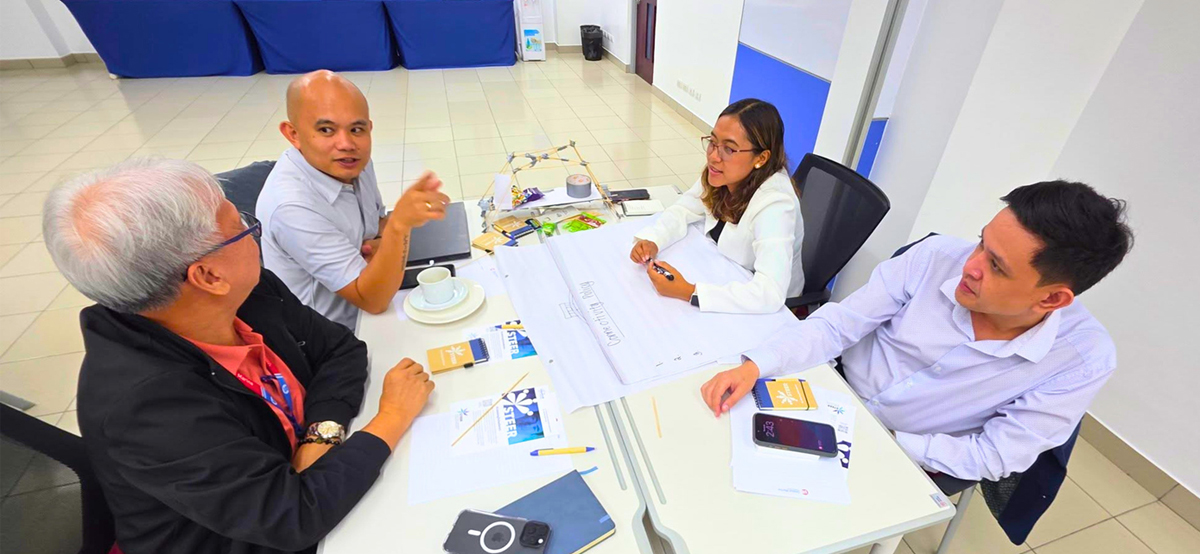
The Nautical Institute recently conducted its first face-to-face Leadership & Professional Behaviours Workshop in Manila on June 30, 2026, in collaboration with The Seafarers’ Charity. The event brought together maritime professionals for an engaging discussion on leadership, safety, crew wellbeing, and the changing realities of life onboard modern vessels.
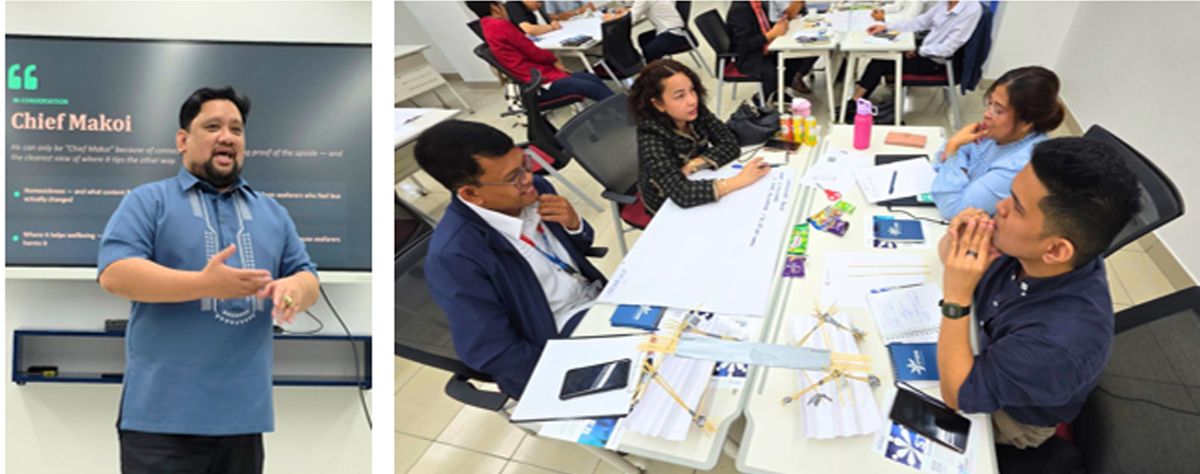
Among the guest resource speakers was Chief MAKOi, Mark Phillip Laurilla, PHILCAMSAT’s Training Manager for Digital Transformation and Innovation. He contributed to a segment examining the effects of continuous internet connectivity at sea, including what it has given seafarers, what it may have taken away, and how shipboard leaders can respond to an increasingly “always-on” environment.
Reliable connectivity has significantly improved the lives of seafarers. It allows them to communicate more frequently with their families, remain informed about events ashore, access online services, and manage personal concerns even while at sea. These benefits can reduce loneliness, improve morale, support crew retention, and make long periods away from home more manageable.
However, the workshop also explored the unintended consequences of constant connectivity.
When crew members spend most of their free time on their phones or laptops, messrooms and recreational spaces can become empty. Informal conversations may become less frequent, while individuals increasingly retreat to their cabins after duty. Although they remain connected to family, friends, and online communities ashore, they may gradually become disconnected from the people living and working beside them onboard.
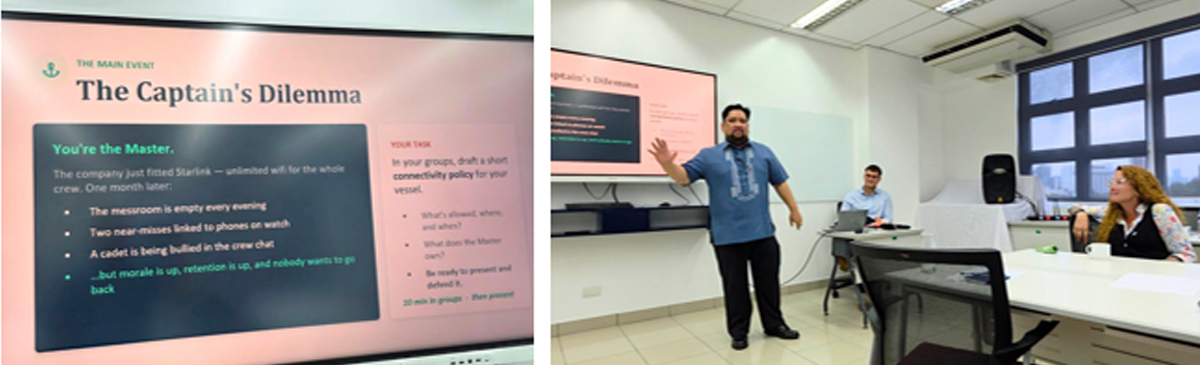
This challenge was examined through an activity titled “The Captain’s Dilemma.” Participants were presented with a vessel that had introduced unlimited internet access for the entire crew. After one month, morale and retention had improved, but the messroom was empty every evening, two near-misses had been associated with phone use while on watch, and a cadet was being bullied through the crew’s online group chat.
Participants were asked to draft and defend a practical connectivity policy for the vessel. They had to consider what should be allowed, where and when devices could be used, and what responsibilities should remain with the Master.
The exercise showed that the issue is not simply whether internet access should be allowed or restricted. The greater challenge is finding a responsible balance between connectivity, safety, discipline, privacy, wellbeing, and healthy human interaction.
Clear boundaries remain essential. Personal devices should never interfere with watchkeeping, safety-critical tasks, drills, meetings, or emergency duties. Online harassment and bullying must also be treated with the same seriousness as misconduct occurring face to face.
The discussion further emphasized that rules alone cannot create camaraderie.
Chief MAKOi shared that leadership onboard is often situational, requiring the Captain and senior officers to adjust their approach depending on the condition and needs of the crew. When continuous connectivity begins to reduce face-to-face interaction and weaken camaraderie, leaders may need to become more deliberate and proactive in bringing people together. This could include organizing parties, sports, games, movie nights, shared meals, or other recreational activities that encourage crew members to step away from their phones and laptops for a few hours and reconnect with one another.
These activities are not intended to remove the benefits of connectivity or compel artificial friendships. Rather, they create opportunities for genuine interaction, help strengthen teamwork, and reduce the risk of crew members becoming socially isolated while living within the same vessel.
Following the presentation, he was asked how the industry could address online bullying, particularly when it contributes to depression and the deterioration of a seafarer’s mental health.
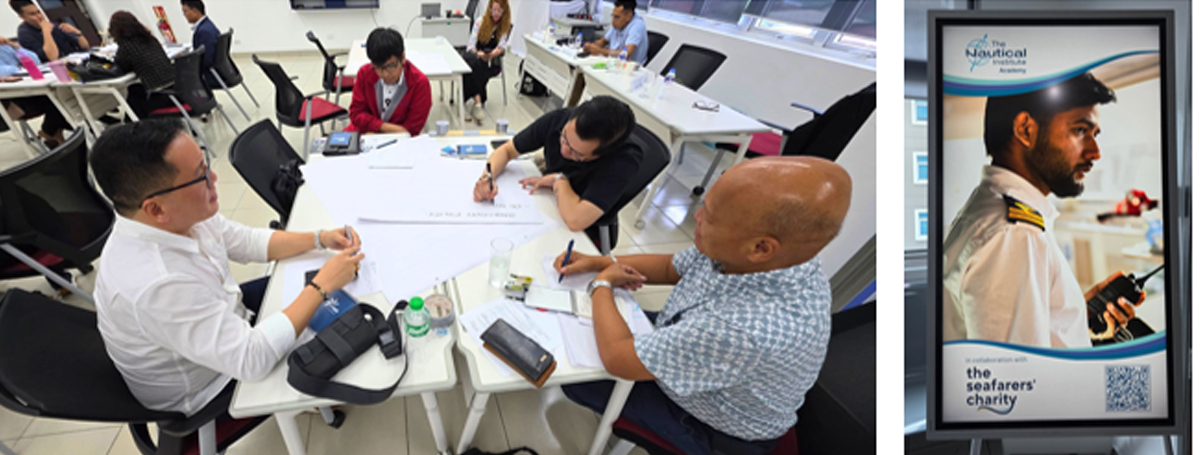
In response, he recalled that around a decade ago, the maritime industry placed considerable emphasis on developing resilience among seafarers. In recent years, however, that focus appears to have received less attention.
He noted that online bullying is difficult to eliminate completely. The internet can provide users with a sense of anonymity and distance, making it easier for some individuals to disrespect, insult, or harass others without immediately experiencing the consequences of their actions.
For this reason, he suggested reviving and strengthening resilience initiatives within the industry. Workshops, facilitated discussions, peer-support activities, and other programmes designed to develop mental and emotional fortitude could help seafarers process negative comments, avoid internalizing online abuse, and respond to bullying without allowing it to undermine their wellbeing.
At the same time, resilience should not be treated as a substitute for accountability. Shipboard leaders and companies must still establish clear standards of behaviour, provide safe reporting channels, intervene when bullying occurs, and support affected crew members. The responsibility should not be placed solely on the person being targeted.
The workshop reinforced the idea that modern maritime leadership extends beyond vessel operations and technical competence. Today’s Masters and senior officers must also understand how technology affects behaviour, relationships, safety, mental health, and the overall social environment onboard.
Continuous connectivity has made life at sea easier in many ways. It has allowed seafarers to remain close to their families and connected to the world ashore. Yet without thoughtful leadership, clear boundaries, and deliberate efforts to preserve human interaction, it can also weaken the sense of community onboard.
The challenge for maritime leaders is therefore not to choose between connectivity and camaraderie, but to protect and promote both.


Comments are closed