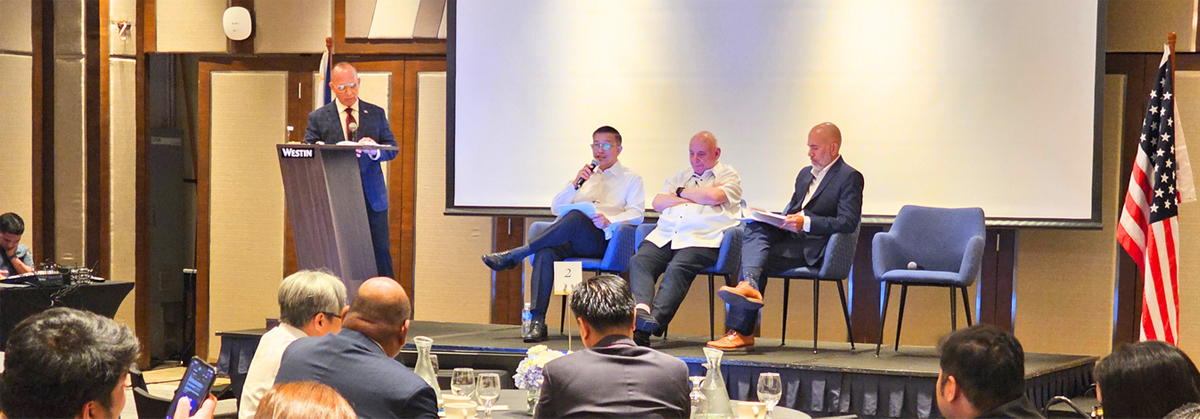
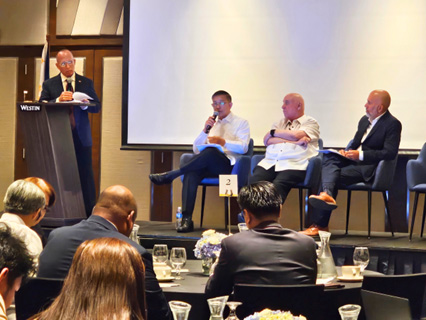
Speaking at the “Submarine Cables, Security & Digital Economic Growth Forum” on May 14, 2026, the PTC Group’s MGen Restituto Padilla, Jr (Ret) offered six key points on how to position the Philippines as a trusted, secure, and competitive digital hub in ASEAN.
Organized by the U.S. Embassy Philippines and APTelecom, the forum brought together stakeholders from various sectors in the submarine cable systems industry to learn from three (3) panels of experts who tackled key barriers and opportunities for submarine cable development in the Philippines, policy enablers and regulatory frameworks, and private sector perspectives, along with investment opportunities, challenges, and market realities. Joining MGen Padilla in the multi-stakeholder panel on the concluding topic “collective vision for the Philippines as a trusted digital hub” were Don Felbaum (ICT Committee Chair, AmCham Philippines) and John Garrity (Director, Cadmus Group).
“The Philippines has the opportunity to evolve from a simple subsea cable landing point into a trusted operational and strategic hub for Indo-Pacific digital infrastructure. Our core strengths include our strategic Indo-Pacific location, large maritime and technical workforce, offshore operational expertise, strong English language proficiency, and growing alignment with regional digital and security frameworks. The key challenge, however, is consistency in execution,” MGen Padilla underscored.
According to MGen Padilla, industry players from both private and public sectors need to work together on the following key areas:
Regulatory Predictability – establishment of a “single-window” system for permits, environmental clearances, maritime coordination, LGU and security approvals, etc.; clear and time-bound processes will reduce uncertainty, improve investor confidence, and strengthen regional competitiveness
Maritime Coordination and Security – subsea cables are now strategic national infrastructure tied to economic security, defense, and digital sovereignty; strengthening coordination among the Philippine Coast Guard, Philippine Navy, Maritime Industry Authority, port authorities, regulators, and local government units will ensure efficient cable operations, rapid repair response, and maritime stability
Specialized Talent Development – position the country as a regional manpower and sustainment hub by building specialized capability in submarine cable operations, marine surveying, ROV systems, fiber maintenance, offshore logistics, cybersecurity, and artificial intelligence (AI)
Logistics and Port Readiness – reducing costly cable downtime by enhancing logistics efficiency and developing strategic supply chain support hubs with priority port handling, repair berths, warehousing, and expedited customs procedures
Maintenance and Resilience – long-term sustainment and resilience will differentiate the Philippines regionally; rapid repair capability, spare cable stockpiles, redundant landing strategies, and disaster resilience systems are imperatives
Public-Private Strategic Alignment – countries that treat digital infrastructure as strategic infrastructure will move ahead fastest; government, industry, and international partners must align around a common vision for digital infrastructure, AI and cloud ecosystems, cybersecurity, national security, and economic growth
“The Philippines can become a trusted, secure, and competitive digital infrastructure partner in the Indo-Pacific by consistently demonstrating speed, predictability, and operational professionalism. If achieved, the country’s geography, maritime heritage, and workforce advantages will naturally position it as a critical node in regional digital connectivity,” MGen Padilla concluded.
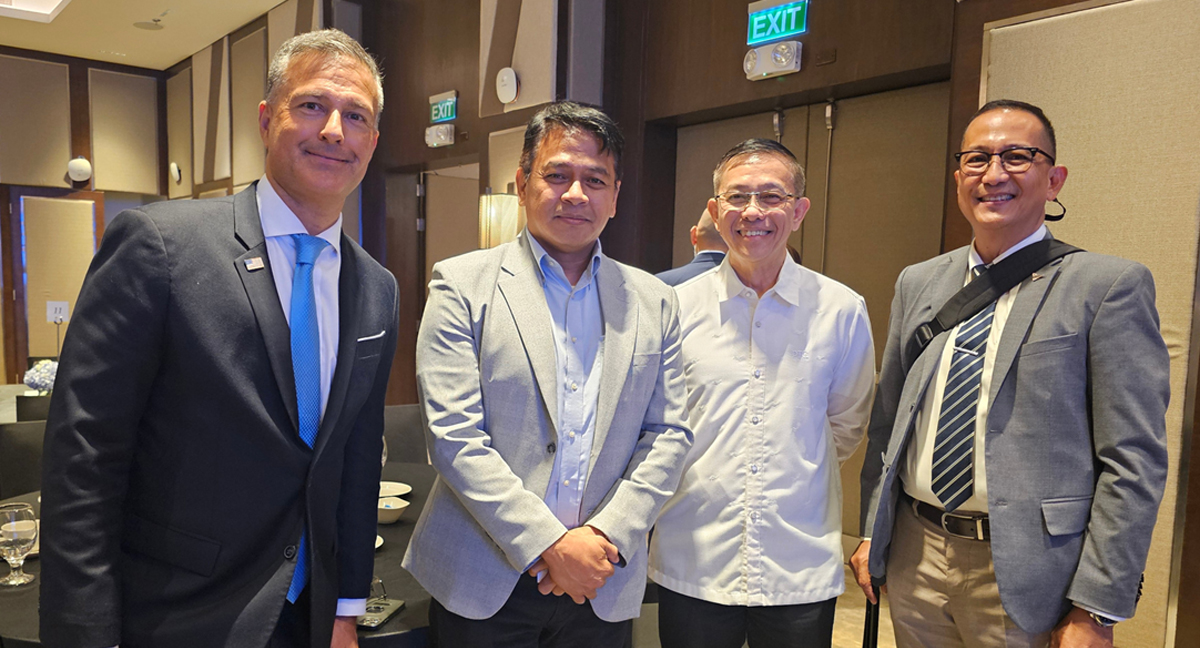
On the forum sidelines, Col Ruel Rombaoa (Ret) conferred with officials from the National Security Council (NSC) and the Philippine Coast Guard (PCG). Asked about the current state of submarine cable security, Vice Admiral Allen Dalangin (Commander of the Maritime Security and Law Enforcement Command (MARSLEC), PCG) mentioned his plan to propose the creation of a submarine cable protection task force. Col Rombaoa suggested the inclusion of private sector experts (e.g., from the PTC Group) in the Task Force. Lighthouse Shipmanagement, Inc (LHSM) of the PTC Group handles total ship management of C/S Vega (a Philippine-flagged cable laying and repair ship owned and operated by NTT WE Marine).
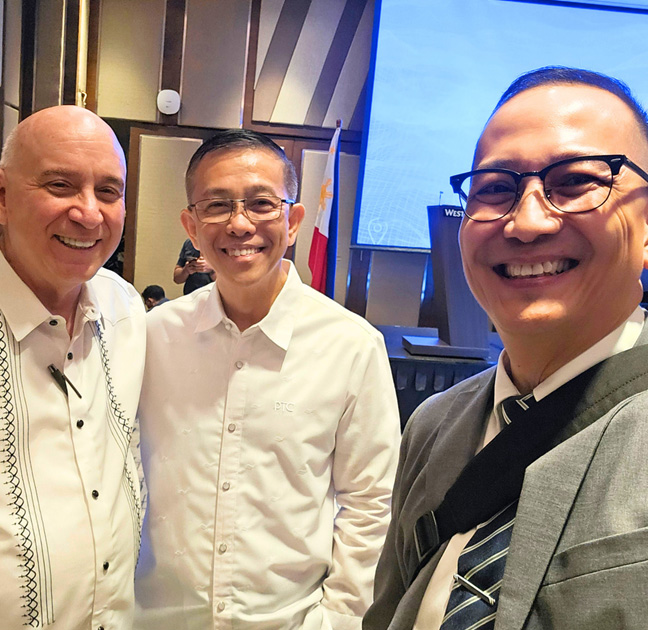 During an earlier closed-door engagement, MGen Padilla, Capt Ronald Enrile, MGen Gems Molina Jr (Ret), and Col Ruel Rombaoa (Ret) met with APTelecom executives to initially discuss potential opportunities to expand PTC’s footprint in the submarine cable laying and repair business.

Comments are closed